
Copernicus by P51
See the world as a system.
Our vision for a foundational world model.
THE MATTERHORN / ZERMATT
One place.
Many relationships.
Start with the ground beneath us. Scroll to reveal the systems that connect it.
Matterhorn elevation model · Illustrative domain layers
A shared representation
Eight domains.
One connected world.
Select a layer to explore what it can reveal.
Select a layer · Drag to rotate
See the connections.
Terrain shapes water. Water sustains ecosystems. People build, move, and adapt within them. Our ambition is to learn these relationships together.
Illustrative examples
- Follow water from a mountain to a city.
- Connect land use with habitats and livelihoods.
- Explore how one change affects many systems.
What becomes visible when we look at the whole system?
The terrain represents the Matterhorn region. The thematic layers and example questions illustrate our research direction; they are not live observations or model results. Data & image sources
 FIELD NOTE 01 / STRUCTURE
02 / The Earth as a living system
Nothing exists
in isolation.
A mountain is also a watershed.
A forest is also a climate system.
A city belongs to both.
We see geography as the meeting point of natural systems and human life. A foundation for understanding how change travels—and what our choices might set in motion.
03 / Ptolemy, our first platform
A place to ask
better questions.
We’re building Ptolemy to connect geographic data, scientific methods, and AI. A shared workspace for investigating the world, tracing evidence, and exploring possible futures.
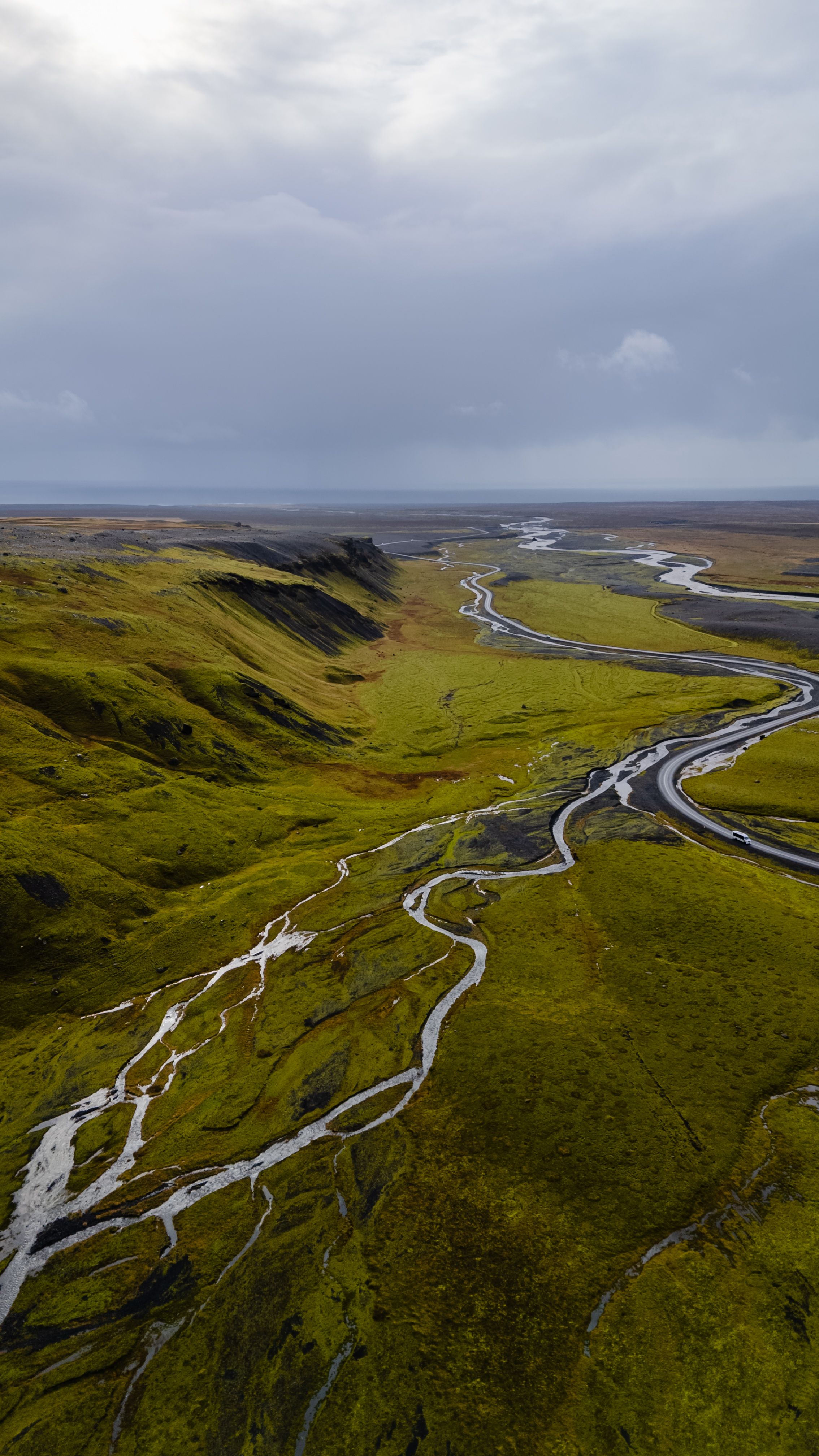
when we restore a landscape?
Bring evidence into a shared geographic context.
Trace relationships across disciplines and scales.
Make possible consequences—and uncertainty—visible.
The next step / Simulation
From understanding
to possible futures.
Our next step is to move from a shared picture of the world to simulations of how it could change. We aim to explore alternatives across natural and human systems, tracing possible consequences before choosing what to test.
A world in motion
Many dynamics.
One shared world.
An imagined coastal city.
Seven ways to explore change.
Seven dynamics. One connected place.
Select a layer below to explore the idea.
A system of possibilities.
Streets, water, people, buildings, signals, and atmosphere. Different dynamics, explored in the same shared world.
A simulation is still a model.
The next question is what holds up in the real world.
Field experiments / Closing the loop
Close the loop.
With the real world.
Data represents the world. Simulation helps us form hypotheses. Our ambition is to test those ideas through field experiments with citizens: designing changes together, observing what happens, and bringing the results back into our models.
Ask together.
Citizens help define the question and what improvement would mean.
Simulate.
Explore alternatives, assumptions, and possible consequences.
Test in place.
Run small, agreed field experiments. Measure outcomes and listen to people’s experience.
Learn & update.
Use the evidence to revise the models, challenge assumptions, and ask better questions.
Learning needs feedback.
Code can be run, tested, and revised. Intelligence about the world needs a feedback loop too: measurements, experiments, and the lived experience of the people affected.
The measure of progress:
better everyday lives.
 FIELD NOTE 03 / EMERGENCE
The idea behind P51
Many minds.
Better futures.
Understanding a shared world should be a shared endeavor. Science and AI can extend what we see. People bring the questions, values, and lived experience that give it meaning.
Our vision is participatory: the people affected by a decision help shape the questions, explore the alternatives, and learn from the results.
Read the founding ideasResearch. Collaboration. Shared possibility.